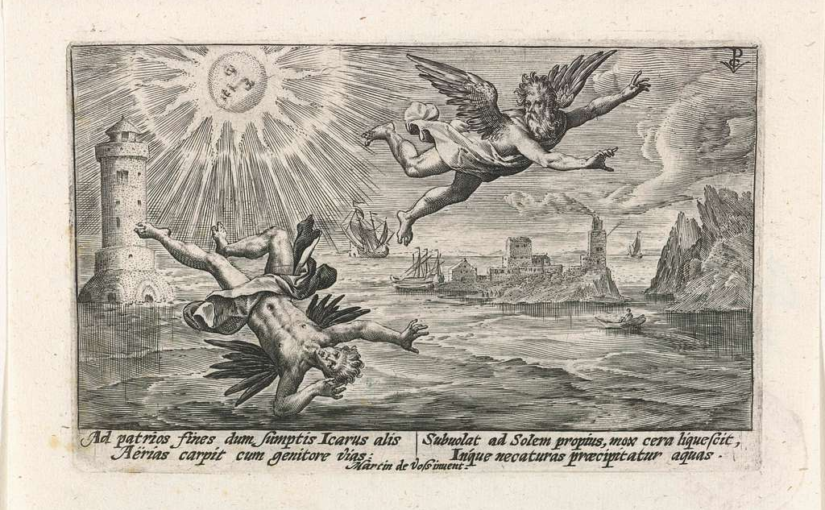
In his essay “I Am a Silicon Valley Pioneer. We Are Sabotaging Ourselves.” in yesterday’s New York Times, the Virtual Reality pioneer Jaron Lanier opines that the leaders of Artificial Intelligence (AI) companies are seduce by having “god-like” powers. Perhaps this is a quest to approach god via a new tower of Babel. Perhaps Silicon Valley luminaries fancy themselves flying to the sun à la Icarus. These stories don’t end well.
So I will also reach into the past for guidance on to how to deal with the hubris AI, to the Code of Hammurabi for professionals: the designer is personally responsible.
Indeed this principle is embodied in the Code of Ethics from the National Society of Professional Engineers, the first canon of which is “Hold paramount the safety, health, and welfare of the public.”
One could argue that Isaac Asimov‘s Laws of Robotics follow in this vein: the first rule being: “A robot may not injure a human being or, through inaction, allow a human being to come to harm.”
While the ethical principle is clear, the practice requires a legal framework. I propose several:
- Minimum requirements be established via public consensus Codes and Standards. The consensus approach brings together designers, suppliers, manufacturers, regulators, users, insurers and the public. A pertinent example is the ASME Boiler and Pressure Vessel Code, demonstrates the path covering design, construction, validation and verification, inspection, and in-service surveillance.
- Engineers developing AI be licensed as Professional Engineers with a corresponding duty to the public, and subject to sanction (license revocation).
- That liability limits be removed from Officers and Directors of companies that deploy public facing AI, so that they face personal financial risk. Engaging qualified licensed engineers and constructing AI to the minimum standards would stand as a defense, and would likely be a requirement for liability insurance coverage.
I think this framework would help protect society and enable all of us to benefit from AI.
[Full disclosure: some four decades ago, when my wife worked for Apple Computer Inc., I socialized with Mr. Lanier at parties. ]